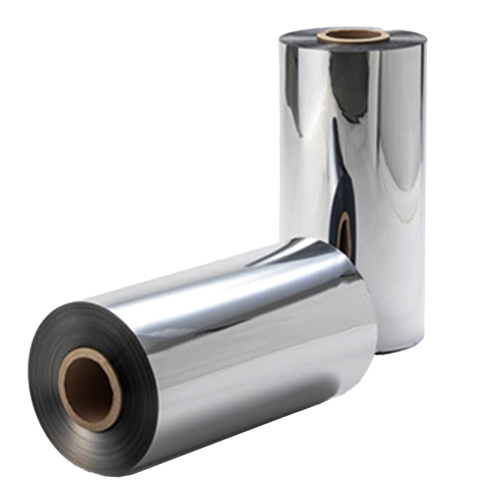
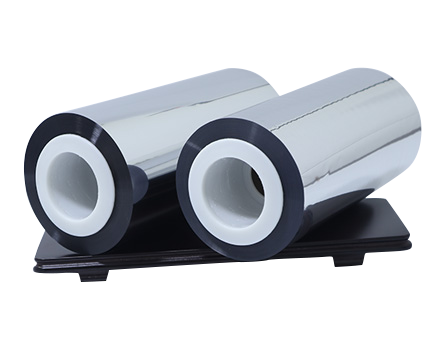
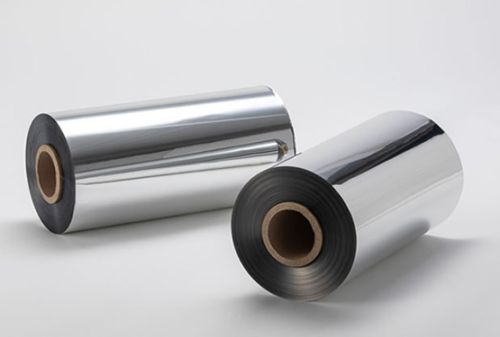
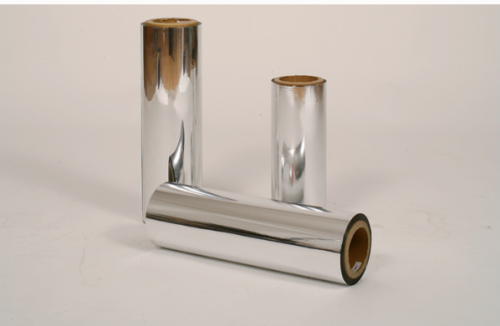
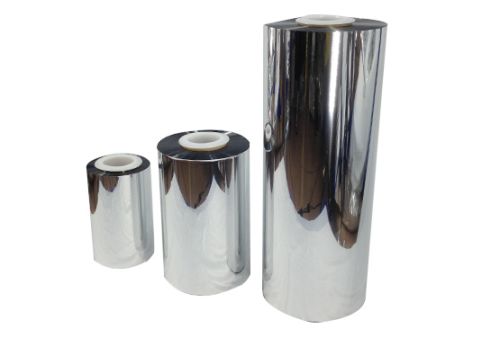
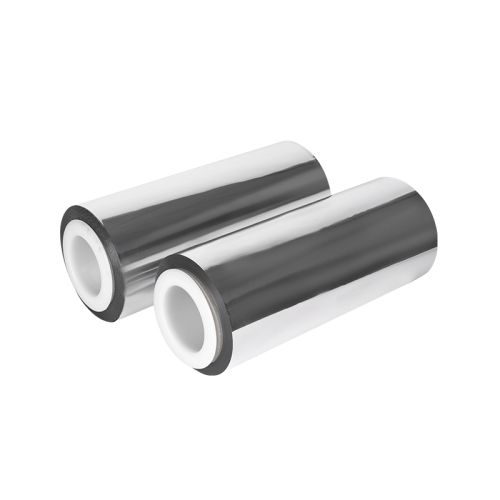
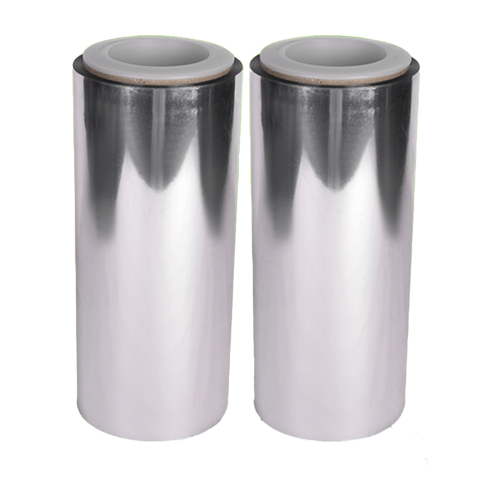
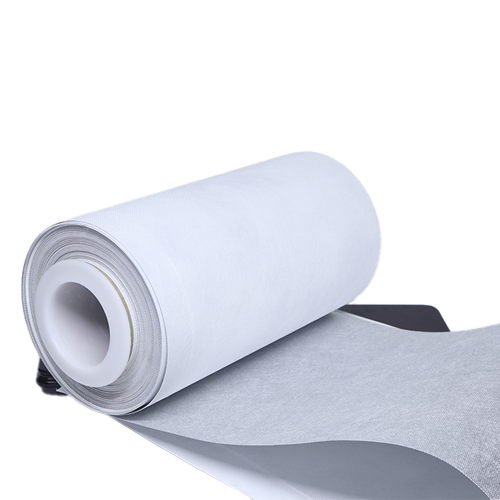
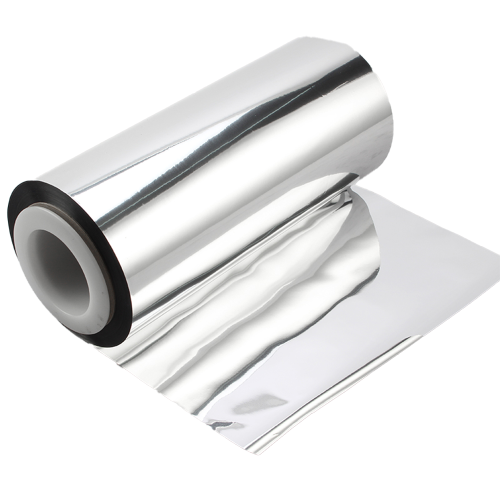
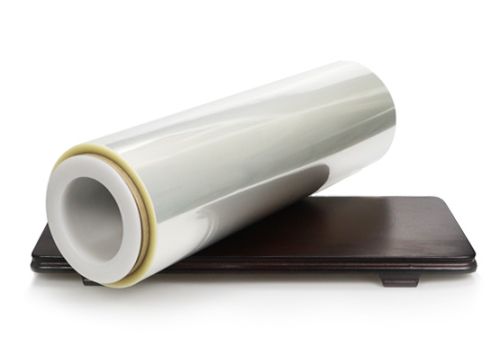
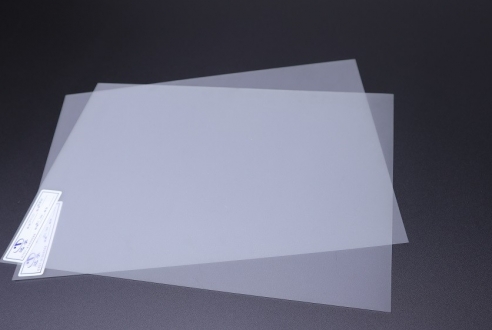
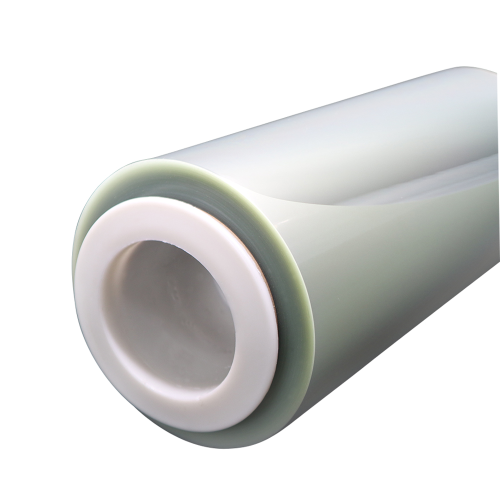
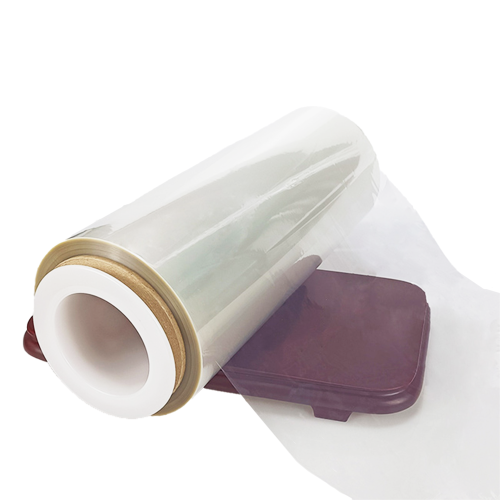
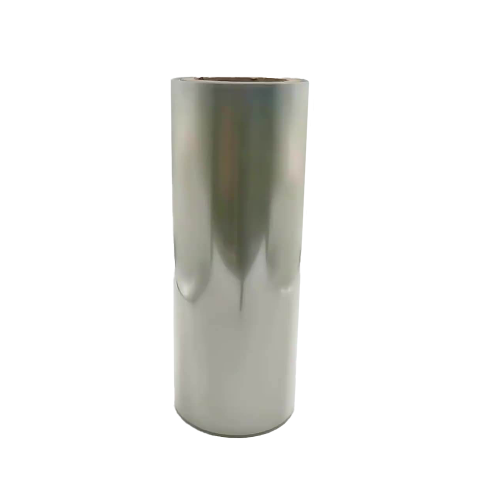
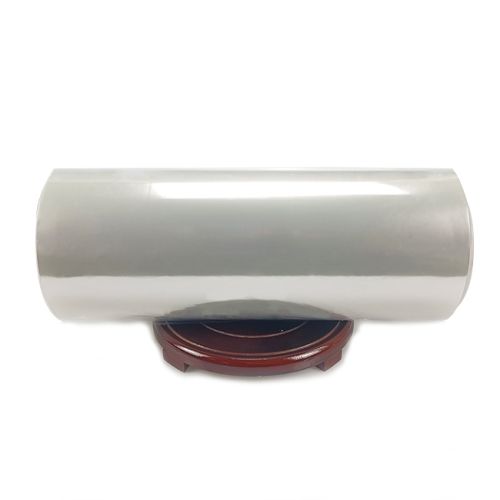
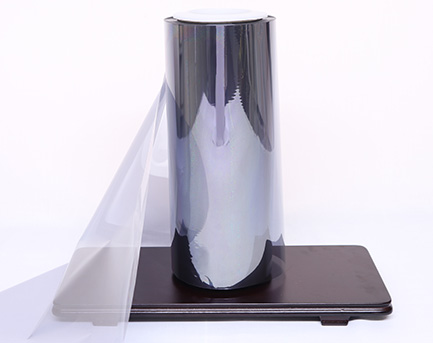
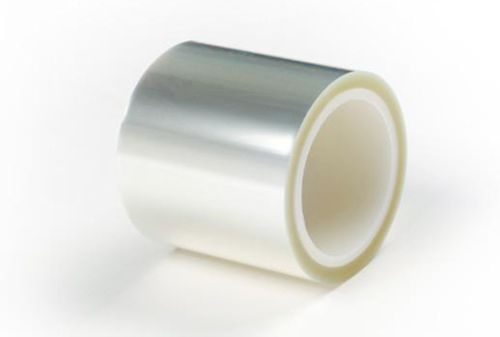
A hanging product tag can turn on its cord and expose a reverse face that was barely considered when the artwork was approved. If the front uses a metallic effect and the reverse looks like an unfinished backing, the tag can lose its intended appearance before anyone reads it. A buyer reviewing double sided metallized PET can start with one web that has a metallic face on either side. The converting trial still needs to show how each face looks after printing, backing, punching and attachment.
Cailong's film portfolio describes the double-sided product as BOPET with a thin aluminum deposit on both sides. That construction is useful to evaluate when both faces of the film will contribute to the design. It does not establish how an ink will adhere on either face or whether a complete tag will remain flat. Confirm the offered material, face identification and any treatment information for the actual reel, then compare it with the current tag under the same display conditions.
Sketch the finished construction first
Draw the tag in cross section and identify which materials will be visible on the front, reverse and cut edge. Some hanging tags rely on a supporting board for stiffness. If one face of the metallized film is bonded to that board, it will no longer contribute directly to the visible reverse. Consider how the design will expose both surfaces before ordering a trial. Compare a supported construction with the current arrangement and document which component provides the required stiffness.
Build a small group at the actual tag dimensions, including the narrowest shape in the proposed range. The ratio of length to width changes how readily a tag bends around its hanging point. A large laboratory rectangle can look flat while a narrow production tag twists or curls. Include the intended cord or fastener and preserve the same hole position during the first comparison so any difference can be traced to the construction.
Approve front and reverse ink systems on their own merits
Put a small face code outside the trim area on the first printed web. Identify how the roll was loaded and which surface received each ink system. If the reverse needs a dark barcode or small product information, include that exact artwork in the trial. A color swatch alone will reveal little about reading a fine line across the metallic background. Check any white underprint using the intended area and opacity before releasing full artwork.
Evaluate ink anchorage after the converter's agreed drying or curing period. When there is transfer, retain both contact surfaces and inspect where separation occurred. Ink may lift from a coating, the metal may come away with the print, or the backing interface may separate. Document the affected face rather than recording every failure as poor print adhesion. That information tells the supplier which surface and construction need further investigation.
Inspect the hanging hole after punching
Inspect the punch area from both sides using a consistent light. Check for a raised lip, torn decoration or a visible separation at the rim. Pull the tag into its normal hanging orientation and assess whether the cord rubs directly against a decorated face. If the hole sits near an edge, compare samples punched at the allowed extremes of location. The hole may look clean at the center of its tolerance and still create an unacceptable edge under normal converting variation.
Hold the punch tool and backing material constant in the first trial. Record which side faces the cutting tool. If the appearance problem follows the tool side after the material is turned over, investigate the punching setup. If the issue stays with a particular film face, review that face's printing, lamination or handling history. Keep the sample that shows the difference and ask the converter to record the corresponding tool condition.
Evaluate the tag as a customer will see it
Hang samples on the intended product and place them at the expected display height. Check the tag after turning it through its normal range of movement. Inspect the brightest reflected region as well as the areas that remain legible when the tag faces away from the primary light. Photograph approved and rejected conditions together using the same exposure. If the artwork is reviewed at more than one store lighting condition, record those conditions and identify the one used for the final reference.
Include finished tags from the center and edges of the converting web. If they were stacked before display, retain samples from the top and inside of the stack. Check whether handling marks or blocking are concentrated at a particular location. A sample drawn from the top of a neatly arranged pile may miss the contacts that occur during ordinary packing and transportation.
Send a quote request with visible-face requirements
Ask for the trial width and gauge that suit the planned tag construction. Include the tag drawing, the film faces used by each operation, the ink or adhesive interfaces and the expected display orientation. Specify whether a roll sample or finished converted tags are required. If one face needs a different appearance, name the approved reference for that face and describe how it will be inspected.
Record the accepted film lot with the two face references and the actual die and hanging hardware. When a later order changes one surface treatment or the print sequence, repeat the affected face check and review the finished tag under the agreed lights. A purchase release can then identify the double-sided material and the converting construction that produced the appearance approved by the buyer.
If tags are packed with printed faces touching, inspect paired surfaces after the normal storage interval. Keep the contact orientation with the samples. A mark on the reverse can originate from a neighboring tag rather than from the material on that face.