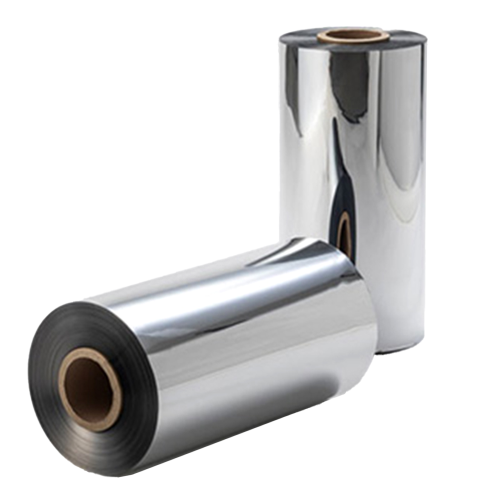
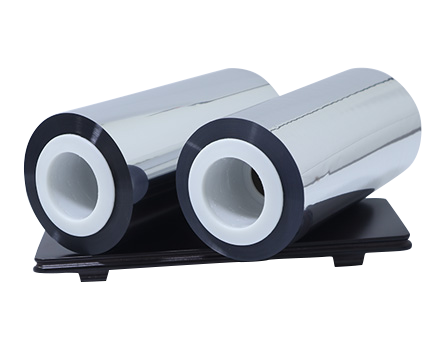
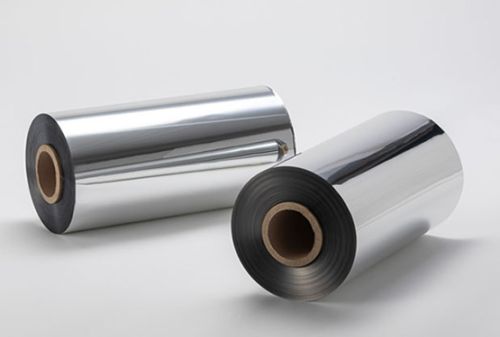
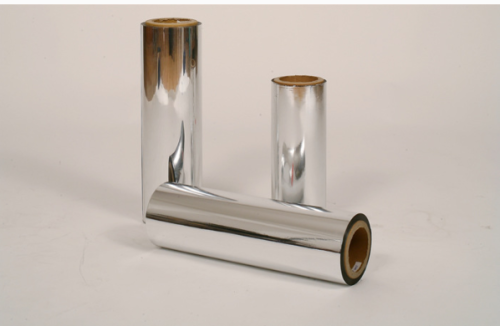
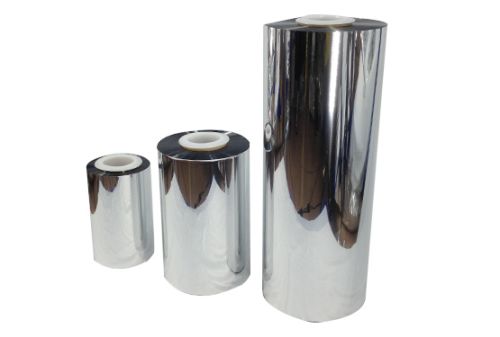
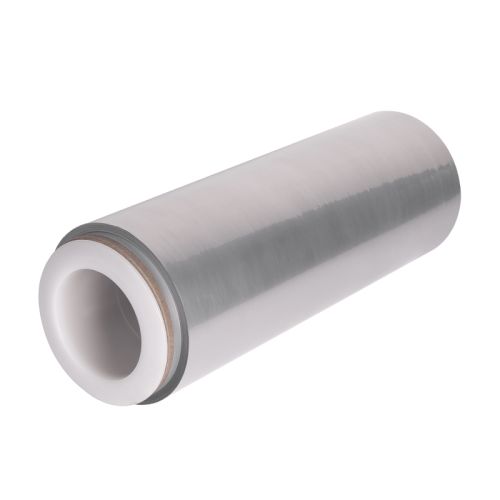
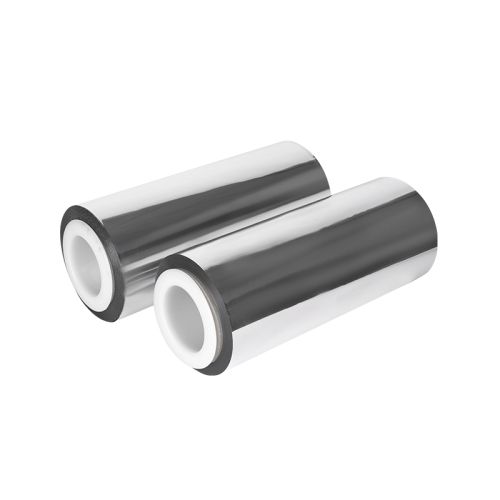
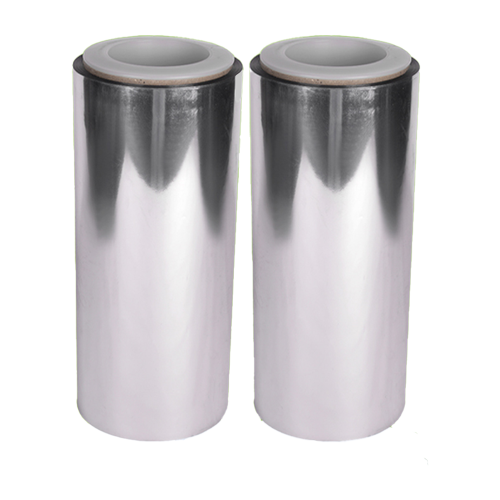
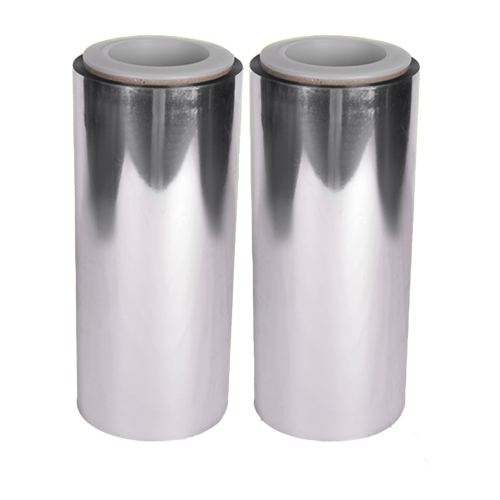
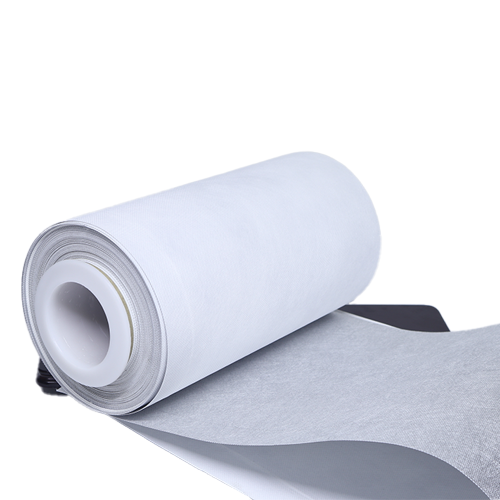
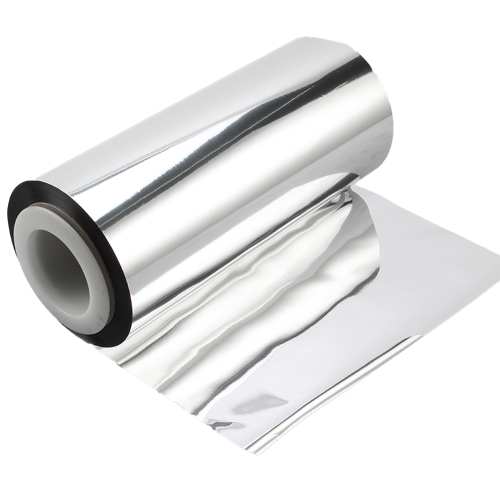
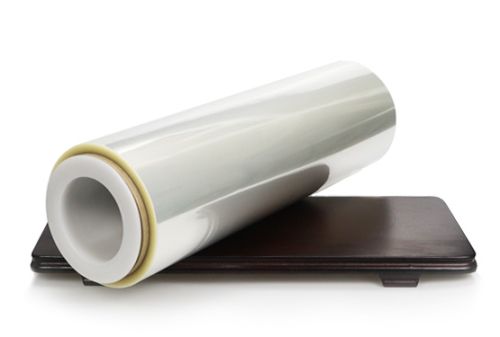
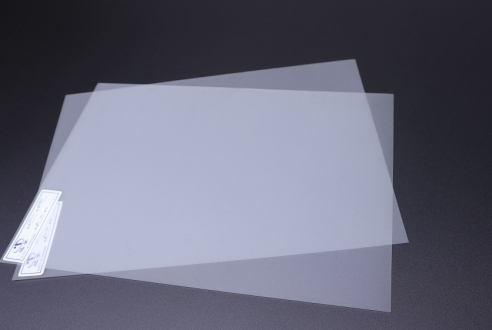
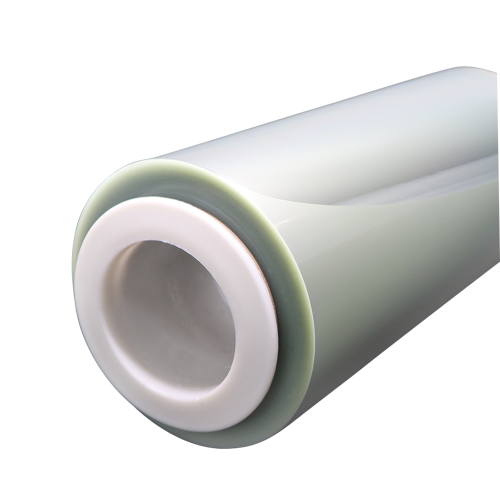
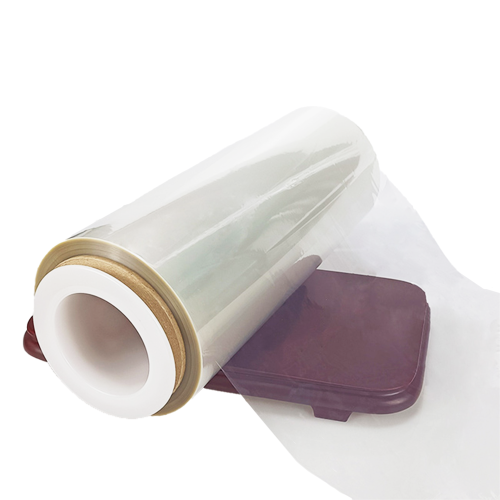
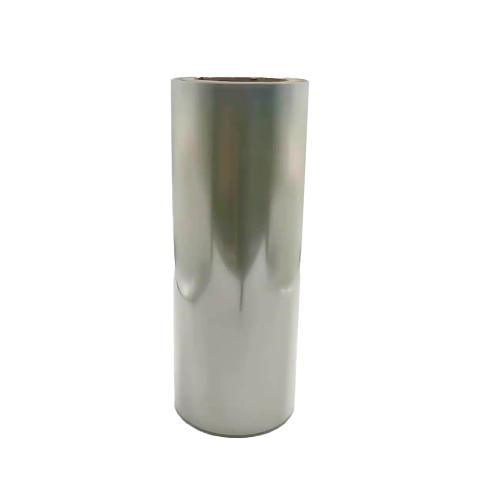
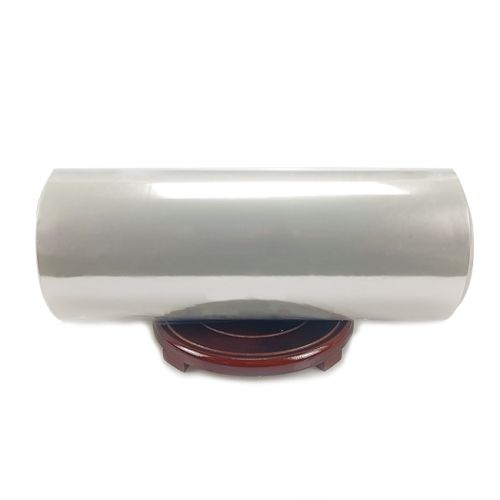
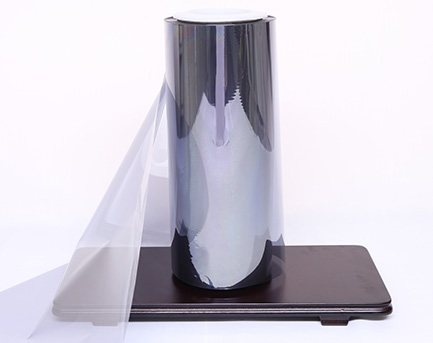
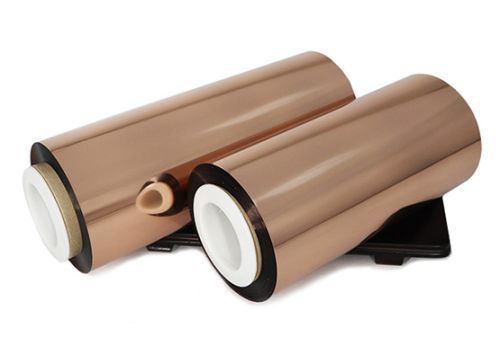
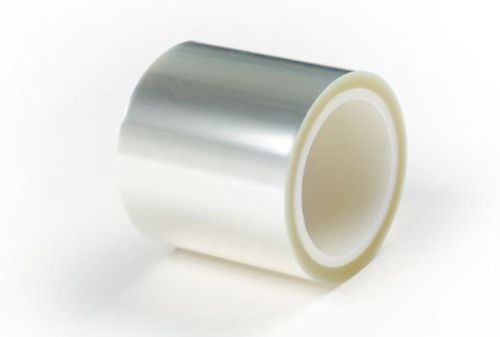
If your packaging line demands the puncture resistance of nylon andthe light/oxygen barrier of aluminum—without stepping up to a full foil laminate—vacuum metallized BOPA film (industry shorthand: VMBOPA) is the material engineers increasingly turn to.
This guide breaks down what VMBOPA actually is, where it outperforms alternatives, the specs that matter when you source, and how converters & brand owners typically build it into real-world pack structures.
What Is BOPA Metallized Film (VMBOPA)?
BOPA = Biaxially Oriented Polyamide (Nylon-6) Film—a high-toughness base film stretched in both machine direction (MD) and transverse direction (TD) to deliver exceptional tensile strength, tear resistance, and impact/puncture performance.
Metallized = A vacuum-deposited aluminum layer (typically nanometers-thin, applied in a high-vacuum chamber) that turns the surface into a brilliant silver barrier skin—slashing oxygen transmission and light transmission, while adding that signature metallic look customers associate with premium, shelf-stable products.
Put together: VMBOPA = Nylon's mechanical muscle + metallized aluminum's barrier & brilliance, in a single functional substrate.
Common naming variants you'll see in global RFQs: metallized BOPA film · vacuum metallized nylon-6 film · metallized polyamide film · silver BOPA laminate stock · VMBOPA rolls.
Why Choose VMBOPA Instead of Plain BOPA or VM-PET?
This is the question every buyer asks. The honest answer: it depends on what your pack is protecting.
| Factor | VMBOPA (Metallized BOPA) | Plain BOPA | VM-PET (Metallized PET) |
|---|
| Puncture / bone-pierce resistance | ⭐⭐⭐⭐⭐ Nylon's biggest edge | ⭐⭐⭐⭐⭐ | ⭐⭐⭐ Moderate |
| Oxygen barrier (after metallization) | Very High (OTR drops drastically) | Low–Moderate (PA breathes) | Very High |
| Moisture barrier | Improved by Al layer, but BOPA itself is hygroscopic—final barrier is built via the full laminate (usually PE/CPP inner layer) | Poor alone | Better inherent moisture profile |
| Retort / heat endurance | Strong — compatible with retort pouch stacks | Strong | Strong |
| Flex-crack behavior | Better on aggressive fill shapes / heavy frozen bricks | Better | More prone to flex-crack at folds |
| Cost position | Premium | Mid–Premium | Mid |
Translation: VMBOPA earns its place when the pack face needs to survive sharp product edges (bones, frozen block corners, hardware) andthe contents need oxygen/aroma protection + shelf-life extension—but you want to avoid full aluminum foil's rigidity, opacity-to-sensors, and higher cost/denesting issues.
Typical Specification Envelope (What to Verify in a Quote)
Different lines standardize different gauges, but these are the numbers professional converters actually care about:
| Parameter | Typical Range / Value | Why It Matters |
|---|
| Base thickness | 12 / 15 / 16 / 18 μm (10 μm for balloon-grade) | Thicker = more puncture margin; thinner = cost & yield |
| Aluminum layer (optical density / sheet resistance) | OD ≈ 1.8–2.2 or sheet resistance ≈ 2.0–3.0 Ω/□ class | Controls barrier & "mirror" quality; ask for uniformity tolerance |
| OTR (23°C, 0% RH, metallized side sealed) | Can fall into the ≤1–2 cc/m²·day range on well-run lines | Real-world shelf life lives or dies here |
| MVTR | Determined largely by final structure (the Al layer helps; the PE seal layer does the heavy lifting) | Never quote MVTR on a single VMBOPA web alone—always test the laminate |
| Corona treatment level | ≥ 38–42 dynes/cm (print/lamination side) | Below spec = delam risk under retort or freeze |
| Shrinkage / TD-MD stability | Low shrinkage formulation critical for high-speed print & laminate register | Ask for shrink @ 150°C / 30 min data |
| Roll specs | 3″ or 6″ core; widths to order; splice policy documented | Line downtime is expensive—tight roll spec pays for itself |
Pro tip for buyers: Always request three things from a VMBOPA supplier before placing volume POs:
- A certified COA template they actually use
- Aluminum adhesion test (tape peel / rub test protocol)
- A sample laminate coupon run on youradhesive system, not just loose film
Where VMBOPA Actually Gets Used (Real Applications)
1. Retort & High-Temperature Processed Food Pouches
Ready meals, cooked meat packs, and sauce pouches that see 121 °C sterilization rely on BOPA's thermal dimension stability—VMBOPA adds the oxygen shield so flavor and color hold through extended shelf life.
Typical stack: BOPA (print) / adhesive / VMBOPA (or reverse: BOPA-outside-print / VMBOPA-inner) / adhesive / sealant (CPP/PE) — tuned to your sterilizer profile.
2. Frozen Food & "Aggressive" Vacuum Packs
Bone-in portions, frozen seafood bricks, and bulk protein vacuum packs punish film at −18 °C to −30 °C. Nylon absorbs the abuse; the Al layer keeps O₂ away from fats that would otherwise oxidize and off-flavor.
3. Premium Dry / Aroma-Sensitive Products
Coffee, cocoa, seasoning blends, and some confectionery lines use VMBOPA when they want brighter metallic shelf presence than matte-foil alternatives allow, with better burst strength than PET-only routes.
4. Medical & Electronics (Moisture + EMI considerations)
Vacuum-sealed component reels, sterile device overwraps, and sensitive-part re-packing where puncture safety matters more than "full foil" barrier.
5. Balloon & Decor Film (Specialty Grade)
Ultra-thin 10–12 μm VMBOPA is the classic metallized balloon film substrate—lightweight, glossy, helium-retentive, and far tougher than metallized BOPP in handling.
How to Evaluate a VMBOPA Supplier (Beyond the Price/Kg Number)
A surprising number of quality issues trace back not to "bad resin" but to process control in the vacuum metallizer and post-treatment handling. When you vet a source, press on these:
- Vacuum chamber tech & winding stability — uniform deposition across full width is the difference between "pretty sample" and "1-ton run with streaks"
- Raw material pedigree — caprolactam-controlled PA6, food-contact letters, REACH/RoHS where applicable
- Climate-controlled staging — BOPA willdrink humidity from the air; poor warehouse RH control shows up later as curl, poor bond, or erratic die-cut
- Slitting & winding QC — hard edges, trapped debris, and uneven tension create micro-scratches in the Al, which become leak paths in barrier you paid for
- Technical response — if a vendor can't talk through yourlaminate/adhesive system and recommend corona side, treatment level, and dwell-time limits, they're selling kg, not solutions
Quick FAQ (Rich-Snippet Friendly — mark this up with FAQ schema)
Q: Is BOPA metallized film food-safe?
Most VMBOPA grades are produced on food-contact-capable lines using PA6 approved for indirect food contact; request the supplier's FDA / EU 10/2011 statement or local-equivalent compliance letter tied to your end-use.
Q: Can I heat-seal VMBOPA directly?
No. The metallized face doesn't seal. VMBOPA is almost always laminated to a sealant layer (CPP, PE, or specialty sealant) to create a functional pouch.
Q: How does VMBOPA compare to aluminum foil laminates?
Foil gives absolute barrier and total light blockout; VMBOPA gives very highbarrier with more flexibility, better crease survival, and lower gauge weight—ideal when packs must conform or run on high-speed VFFS/SFFS without foil-jam headaches.
Q: What's the minimum order quantity (MOQ) for custom-width VMBOPA?
It varies by line, but many mills work in the 1,000–2,000 kg range for standard 12/15 μm metallized grades; balloon/thin grades sometimes differ. Lead times typically run 2–4 weeks ex-works, longer if new corona/special width setups are needed.
Q: Does BOPA metallized film work for retort at 121°C?
Yes—provided the full laminate structure(adhesives, sealant choice, and pouch geometry) is engineered for retort. Never qualify barrier on the single film; qualify the finished pouch.
Closing (Soft CTA — lead-focused, not pushy)
Whether you're re-specifying an existing laminate to cut leakers, or developing a new stand-up/flat pouch that needs to look premium andsurvive the cold chain, VMBOPA sits in that sweet spot between brute strength and high-barrier finesse.
If you'd like, we can:
- Cross-check your current pack structure against VMBOPA alternatives
- Run a barrier-cost vs. shelf-life sanity check
- Arrange trial rolls in your target gauge & width with COAs