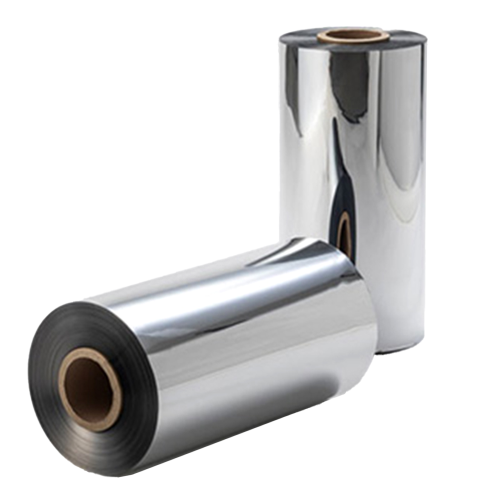
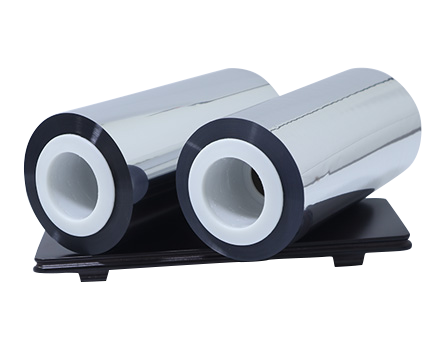
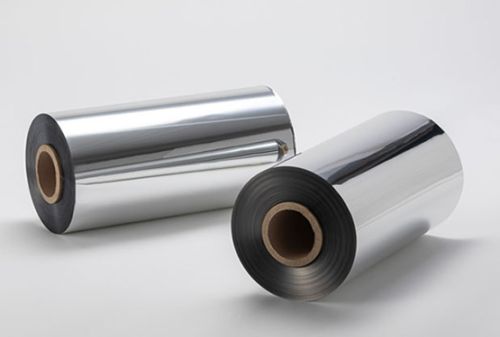
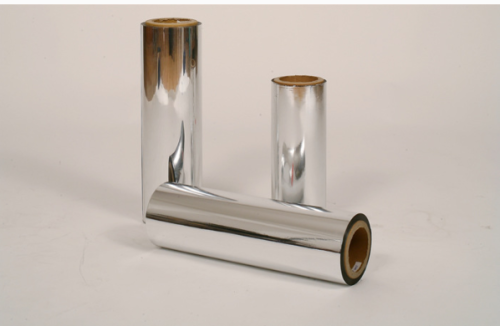
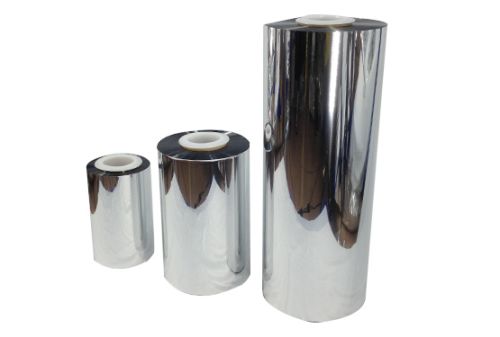
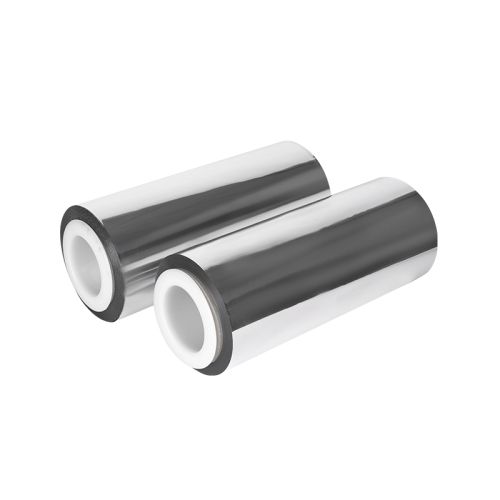
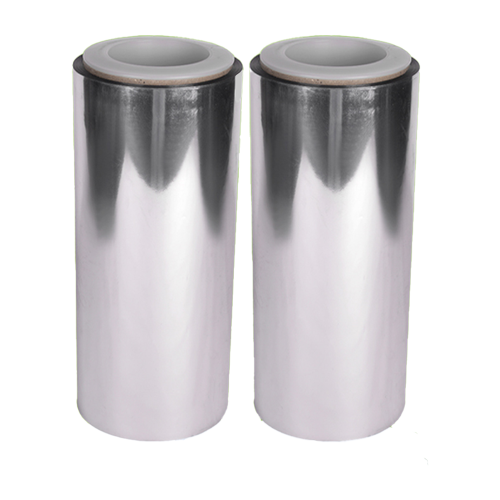
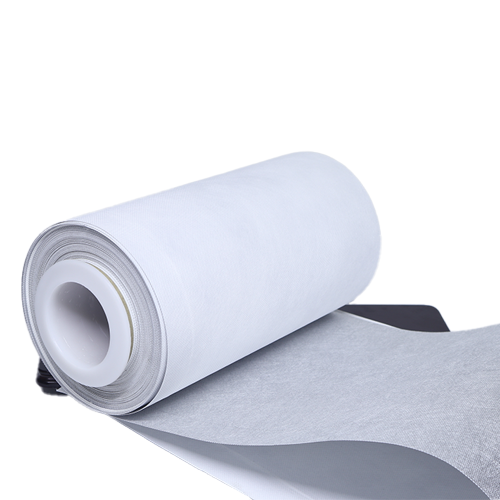
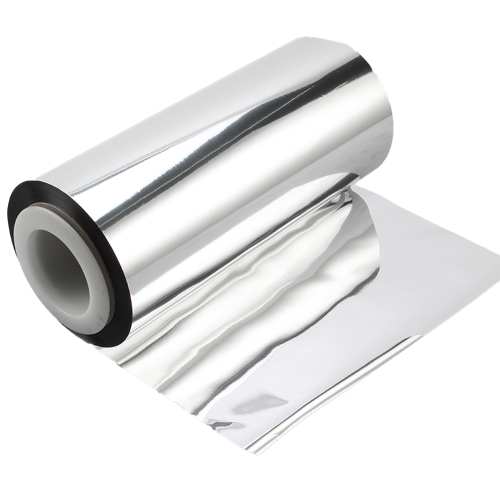
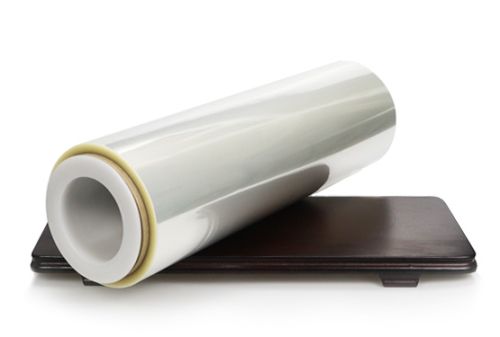
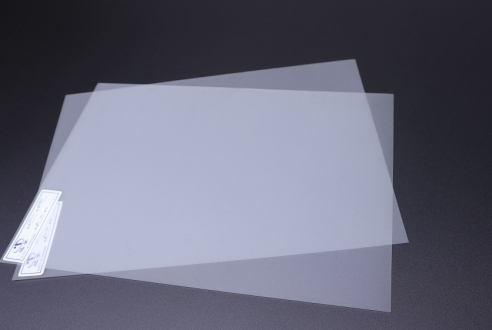
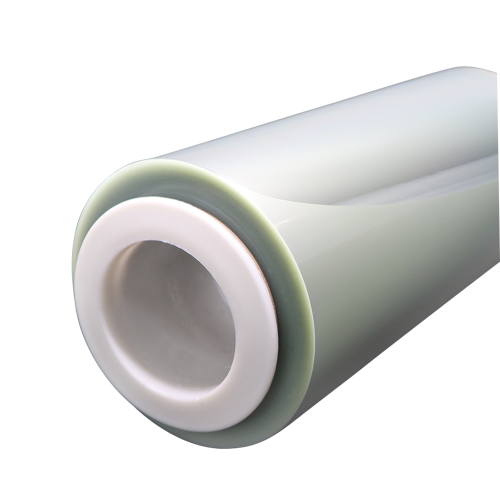
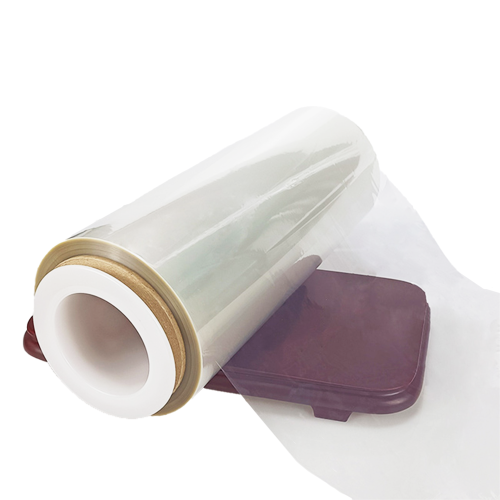
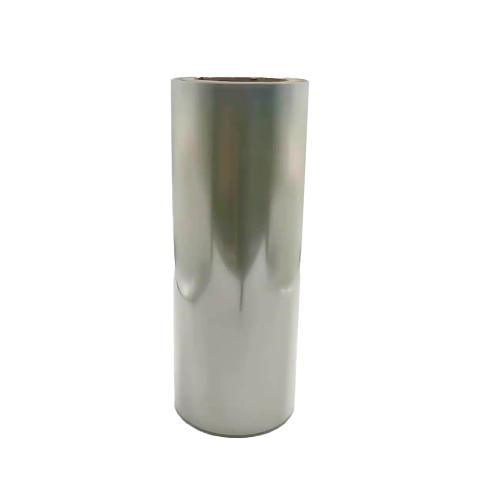
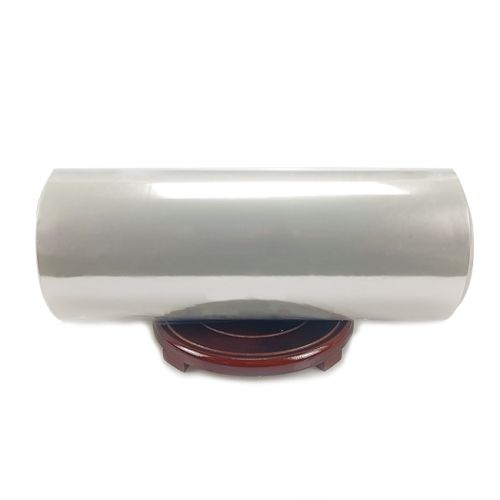
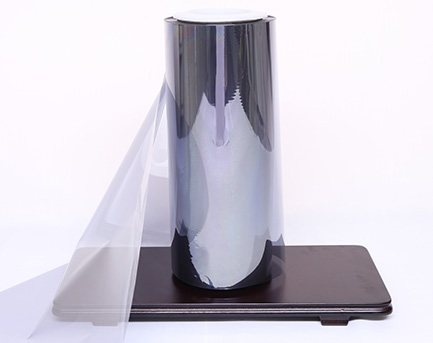
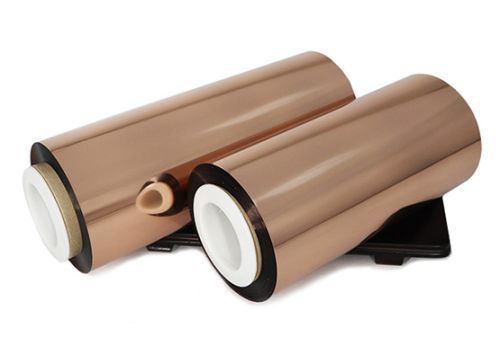
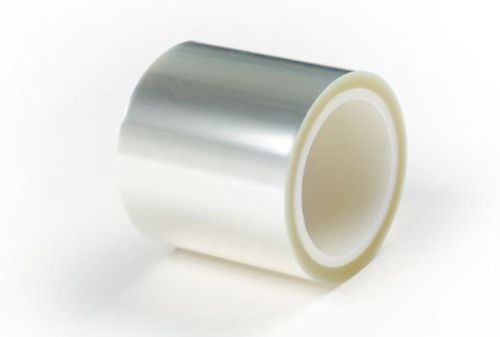
A low sheet-resistance value does not by itself prove that a converted part will provide reliable electromagnetic shielding. Copper Metallized PET Film combines a flexible PET carrier with a thin conductive copper surface, but electrical performance can change after slitting, lamination, die cutting, bending, adhesive application, and assembly. Buyers should connect sheet resistance with coating continuity, contact resistance, grounding, overlap, frequency, and the geometry of the finished component.
What Sheet Resistance Tells You
Sheet resistance, normally expressed in ohms per square, compares current flow across a thin conductive layer. Because the ratio is geometric, the same value can be used for different square sample sizes when the coating is uniform. It is useful for incoming screening and mapping variation across a roll.
Cailong’s published information describes a PET film with a high-purity copper layer applied by physical vapor deposition. Selected grades can reach approximately 0.3 ohm per square under specified test conditions. This is a grade-screening value, not a universal EMI-shielding result or a guarantee after conversion.
Why the Finished Part Can Perform Differently
Shielding effectiveness depends on electrical continuity across seams, grounding points, apertures, folds, and contacts. A good flat-film value can be undermined by scratches, cracked copper, a nonconductive adhesive, weak overlap, oxidation, or poor grounding. Frequency also matters because a shielding construction can behave differently across the test range.
PET provides dimensional stability and roll handling, while the copper layer supplies conductivity. The thinner conductive layer reduces metal use compared with solid foil, but it is more sensitive to surface damage. The film should therefore be handled as a functional layered material rather than as an ordinary decorative metallized web.
A Practical Measurement Plan
- Define probe type, spacing, contact pressure, sample conditioning, and measurement direction.
- Map sheet resistance across the web and at several positions through the roll.
- Measure before and after slitting, lamination, die cutting, bending, and environmental aging.
- Inspect failed or high-resistance zones for scratches, cracks, contamination, and coating variation.
- Measure contact resistance through the actual adhesive, overlap, connector, or grounding design.
- Run final shielding or electrical tests on the assembled component over the relevant frequency and environment.
Converting Risks
Sharp blades, dirty rollers, excessive tension, tight bends, and hard creases can interrupt the conductive path. If the film is laminated, the adhesive may isolate the copper surface unless contacts are intentionally exposed or a conductive adhesive is selected and validated. Die-cut edges and registration around grounding tabs require special attention.
Surface oxidation and storage conditions can also affect contact behavior. Confirm packaging, shelf-life expectations, handling, and any protective treatment with the supplier. Do not add an unverified coating or cleaning process because it may change conductivity or adhesion.
Copper Metallized Film vs Copper Foil
Solid copper foil normally offers a thicker conductive section and well-established electrical behavior, but it adds metal weight and may be less flexible in some thin constructions. Copper metallized PET uses much less copper and provides a polymer-supported roll format. It is appropriate when the verified current, thermal, shielding, and mechanical requirements can be met by the thin coating.
The comparison should include bending life, contact design, heat dissipation, current capacity, puncture, converting yield, corrosion protection, and total part cost. A low sheet-resistance film should not be presented as a direct foil replacement without component testing.
FAQ
Does 0.3 ohm per square guarantee EMI shielding?
No. It is a selected-grade sheet-resistance reference. Shielding depends on frequency, continuity, seams, grounding, apertures, contacts, and the assembled design.
Should resistance be tested after lamination?
Yes. Lamination, bending, cutting, and aging can change continuity and contact behavior.
Can ordinary adhesive be used for grounding?
Not unless the design provides another conductive path. Many adhesives are electrically insulating; verify the actual construction.
Conclusion
Supplier Qualification and Lot Control
The RFQ should define substrate, total thickness, copper-side orientation, target sheet-resistance range, width, roll length, core, winding direction, splices, packaging, and storage. Ask how resistance is sampled across the web and how coating defects are classified. A roll-average value can conceal local discontinuities that matter to narrow converted parts.
Qualify more than one production lot when electrical variation creates meaningful risk. Retain mapped samples from approved rolls and compare them with slitting yield, contact resistance, and final shielding results. Require advance notice of changes to the PET base, copper deposition process, protective treatment, or manufacturing route.
Copper metallized PET sheet resistance is the start of qualification, not the final acceptance criterion. Map the roll, protect the copper surface, verify contacts and grounding, and test the assembled component. Review the verified Copper Metallized Film range and request grade-specific electrical and converting information for the intended design.
Related resource: EMI shielding guide