
Release date:2026.07.09
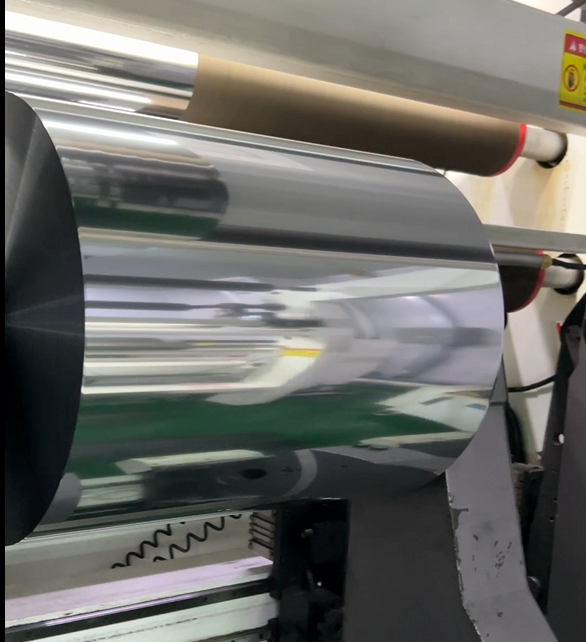
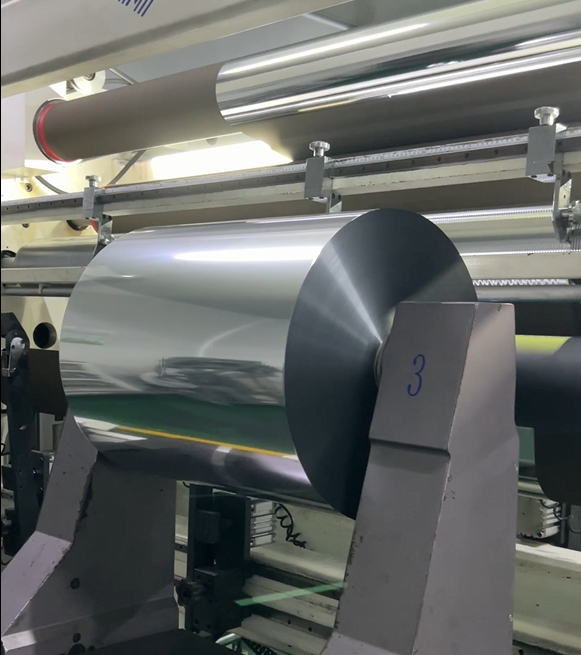
Enhanced adhesion metallized PET film (also referred to as chemically treated surface metallized PET) is produced by applying a chemical treatment to one side of a BOPET base film before vacuum metallization. The aluminum layer is deposited directly onto this chemically activated surface, resulting in significantly stronger metal-to-film adhesion compared to standard untreated metallized PET.
Key difference from standard metallized PET: In standard grades, the aluminum is deposited on a corona-treated or untreated surface. In enhanced adhesion grades, a dedicated chemical primer/treatment is applied to the base film prior to metallization, creating covalent bonding sites for the aluminum atoms.
| Property | Standard Metallized PET | Coated (Pre-Coated) Metallized PET | Enhanced Adhesion (Chemically Treated) Metallized PET |
|---|---|---|---|
| Treatment location | Usually corona on metal side | Non-metal side coated for lamination | Metal side chemically treated for adhesion |
| Aluminum adhesion | Moderate | Moderate (metal side untreated) | Excellent |
| Water resistance | Poor (delamination risk) | Good (lamination helps) | Excellent |
| Pasteurization / boiling | Not recommended | Possible with proper structure | Yes, directly suitable |
| Lamination bond strength | Moderate | High (due to coating) | Moderate (metal side optimized, non-metal side may need separate treatment) |
| Primary advantage | Low cost | Strong lamination | Strong metal adhesion + water resistance |
| Parameter | Value |
|---|---|
| Base film thickness | 12–50 µm |
| Aluminum layer thickness | 300–500 Å (standard); down to 40 Å (ultra-thin) |
| Optical density | 1.5–2.5 |
| Surface tension (metal side) | ≥52 mN/m (after treatment) |
| Coefficient of friction | 0.3–0.6 (adjustable) |
| Tensile strength (MD/TD) | ≥170 MPa |
| Elongation at break | ≥80% |
| Pasteurization test | 85°C / 30 min – no delamination |
| Water immersion test | 24h @ 23°C – no adhesion loss |
Q: What is enhanced adhesion metallized PET film?
A: It is BOPET film that receives a chemical treatment on the metallization side before vacuum aluminum deposition, resulting in much stronger aluminum adhesion than standard metallized PET.
Q: Can enhanced adhesion metallized PET be pasteurized?
A: Yes. The strong metal-to-film bond and water resistance allow it to withstand pasteurization processes (e.g., 85°C hot water bath) without barrier loss or delamination.
Q: How does it differ from pre-coated metallized PET?
A: Pre-coated (coated) metallized PET treats the non-metalside for better lamination. Enhanced adhesion treats the metalside for better aluminum anchorage and water resistance. They solve different problems.
Q: Is this film suitable for coffee packaging?
A: Yes. Its oil resistance, barrier, and flex-crack resistance make it an excellent choice for coffee stand-up pouches and valve-equipped bags.
Q: Does enhanced adhesion affect printability?
A: The non-metal side can be corona-treated or coated separately for printing. The enhanced adhesion treatment is only on the metal side and does not interfere with reverse printing.
Enhanced adhesion metallized PET film fills a specific but important niche: applications where water resistance, pasteurization, and strong aluminum anchorage are critical. By chemically activating the metallization surface, manufacturers eliminate the weak point of standard metallized films — metal peeling under wet or thermal stress.
For converters producing pouches for sauces, soups, baby food, and other pasteurized products, this grade offers a reliable, high-performance alternative to foil laminates or expensive multi-layer structures.
Copyright © 2025 Guangdong Cailong New Material Co., Ltd
粤ICP备2024240626号-1 Site Map