
Release date:2026.07.08
Not all metallized PET films deliver the same barrier performance. Based on Cailong's classification:
| Category | OTR & WVTR (cc or g/m²·24h) | Typical Use |
|---|---|---|
| Ultra‑high barrier | ≤0.5 | Long‑shelf‑life food, pharmaceuticals |
| High barrier | ≤1 | Premium snacks, dry goods |
| Standard high barrier | ≤2 | General packaging |
Cailong states that all their metallized products can achieve OTR and WVTR ≤0.5, placing them in the ultra‑high barrier tier. This is achieved through precise vacuum deposition process control and high‑quality base films.
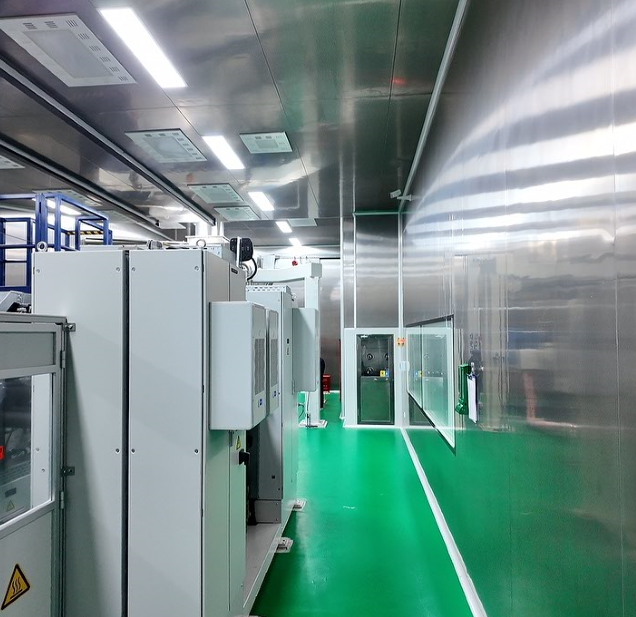
Standard metallized PET may suffer from poor aluminum adhesion when exposed to moisture, oil, or aggressive food contents. Enhanced adhesion grades solve this by using a specially primed (bottom‑coated) base film before metallization.
Three sub‑grades are available:
| Grade | Processing Capability |
|---|---|
| Standard enhanced | General high‑adhesion |
| Boil‑proof enhanced | Withstands boiling water immersion |
| Retortable enhanced | Survives high‑temperature retort (depends on process and structure) |
Target applications:
Note: adhesion performance varies depending on the metallization equipment used, even with the same base film. Cailong's proprietary process ensures consistent results.
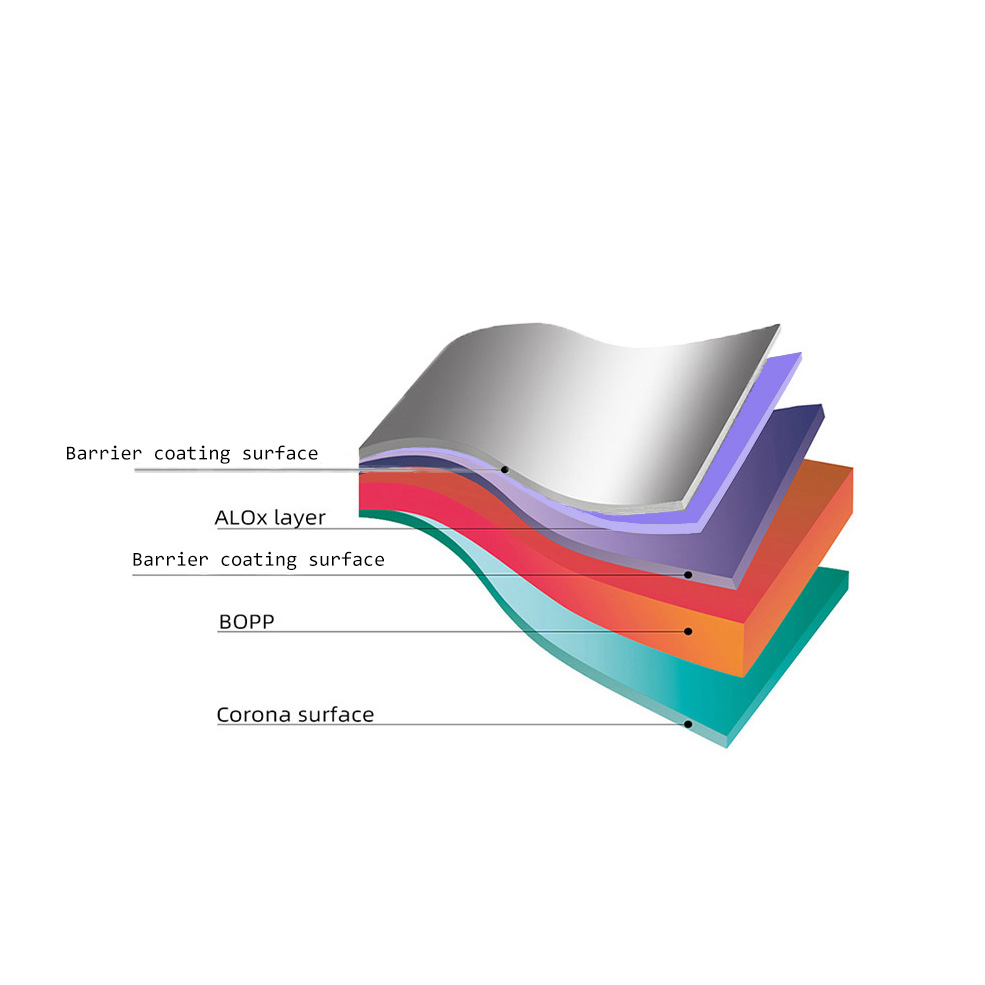
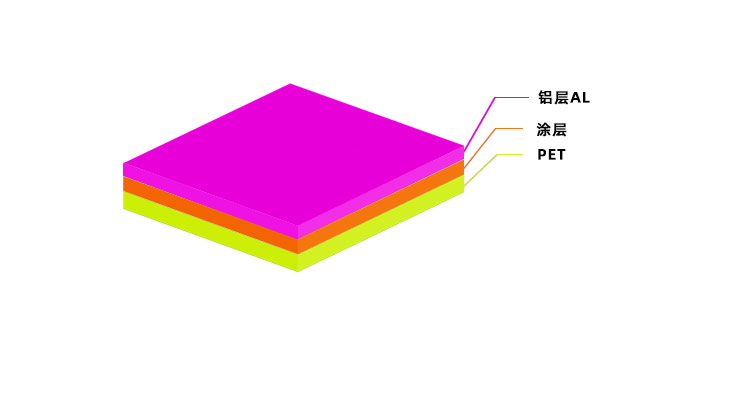
Conventional metallized PET has an aluminum layer thickness typically around 300–500 Å (ångströms). Reducing thickness below 100 Å while maintaining uniformity is technically challenging because uneven deposition causes color variation and inconsistent shading/thermal insulation.
Cailong has innovated to produce aluminum layers as thin as 40 Å with a thickness tolerance of ±3% across the web.
Why ultra‑thin matters:
Applications:
| Feature | Ultra‑High Barrier MPET | Enhanced Adhesion MPET | Ultra‑Thin Al Layer MPET |
|---|---|---|---|
| Barrier level | OTR/WVTR ≤0.5 | Depends on base film; ≤0.5 achievable | Not primary focus |
| Key selling point | Extreme shelf life | Oil/water/retort resistance | 40 Å thickness, ±3% uniformity |
| Main industries | Food, pharma | Wet food, coffee, sauce, chemicals | Automotive, construction, electronics |
| Typical thickness range | 12–23 µm | 12–23 µm | 12–50 µm |
Q: What is considered ultra‑high barrier for metallized PET?
A: OTR and WVTR both ≤0.5 cc or g/m²·24h is defined as ultra‑high barrier.
Q: Can enhanced adhesion metallized PET be retorted?
A: Yes, the retortable enhanced grade can withstand high‑temperature retort processing, though final performance depends on the lamination structure and sealing method.
Q: How thin can the aluminum layer be on PET film?
A: Cailong achieves 40 Å (ångströms) with ±3% uniformity, which is among the thinnest commercially available metallized layers.
Q: What is the advantage of 40 Å aluminum layer for window film?
A: It provides uniform color, consistent IR/UV rejection, and minimal visual distortion, while using significantly less aluminum than conventional films.
Copyright © 2025 Guangdong Cailong New Material Co., Ltd
粤ICP备2024240626号-1 Site Map